
Introduction
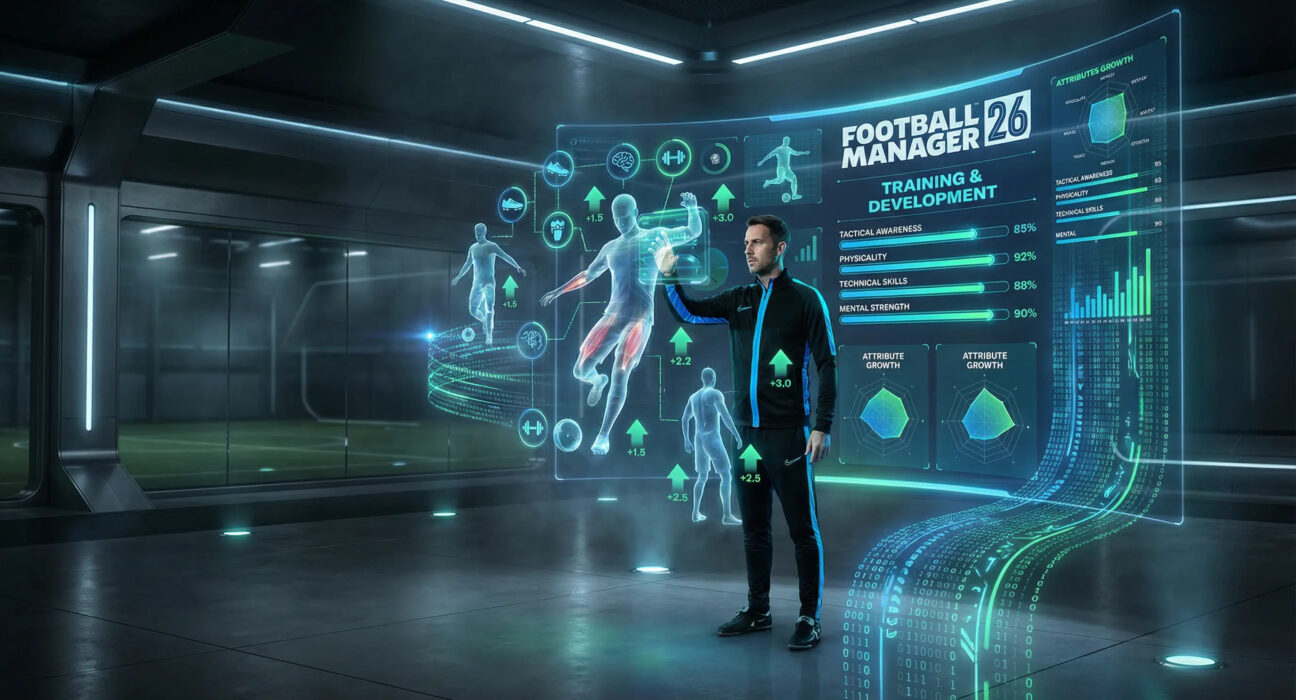
FM26 Training & Development is the most overlooked yet most powerful system in Football Manager 26. Transfers bring talent into your squad — but training determines whether that talent becomes average rotation depth or a world-class superstar.
Understanding how FM26 training works is essential if you want long-term dominance. From individual role training and mentoring groups to loan strategies and match exposure, every decision affects how quickly and effectively players develop.
If you’re building around young talents, especially from our FM26 Wonderkids Guide, mastering FM26 training is not optional — it’s mandatory.
This complete guide will explain:
How FM26 training actually works
How player development is calculated
How to structure individual and team training
How mentoring impacts hidden attributes
When to loan and when to keep players
Common mistakes that ruin development
Let’s build elite players properly.
How Training Works in FM26
Maximising FM26 Training&Development for Optimal Performance
FM26 training impacts player development through several interconnected systems:
1️⃣ Current Ability Growth
Training increases attributes, which raises Current Ability (CA). However:
Growth speed depends on age
Coaching quality impacts efficiency
Facilities influence development ceiling
Match experience accelerates progression
Young players improve fastest between ages 16–21.
2️⃣ Coaching Staff Quality
Your coaching team affects:
Training rating
Attribute growth speed
Tactical familiarity
Key attributes to prioritize:
Working with Youngsters
Determination
Level of Discipline
Coaching category ratings
Elite coaches significantly accelerate FM26 player development.
3️⃣ Training Ratings Matter
Players who consistently achieve:
7.5+ training ratings
→ Develop faster
Low training performance
→ Slower progression
Monitor weekly reports. They matter more than most managers think.
Individual Training vs Team Training
FM26 training is split into:
Team training (overall focus)
Individual role training
Additional focus
Role Training
Always train players in the role you intend to use long term.
For example:
Inside Forward (Attack)
Ball-Playing Defender (Defend)
Advanced Playmaker (Support)
Role training directly influences attribute weighting.
Additional Focus
Use additional focus to:
Improve weak attributes
Prepare position changes
Accelerate specific growth
Example:
A winger with poor finishing → add Finishing focus.
A young CB lacking strength → add Strength focus.
Be patient. Attribute growth is gradual.
Mentoring Groups Explained
Mentoring is one of the most misunderstood parts of FM26 training.
Mentoring affects:
Personality
Professionalism
Determination
Hidden attributes
It does NOT directly increase visible attributes.
Best Mentors
Ideal mentors:
Model Citizen
Model Professional
Team Leader
High determination
Pair young talents with strong personalities.
Avoid:
Inconsistent players
Low professionalism
Poor squad influence
Mentoring builds long-term mentality foundations.
If you’re developing talents from our FM26 Wonderkids Guide, mentoring is critical for maximizing potential.
Loan Development Strategy
Loans can accelerate development — or completely destroy it.
When to Loan
Loan a player if:
They will start regularly
The club has good facilities
The tactical system suits their role
They’re blocked in your squad
Regular match time is development fuel.
When NOT to Loan
Do NOT loan if:
They will sit on the bench
The club plays a mismatched system
Coaching facilities are poor
They’re already getting minutes at your club
Sometimes staying and training at a top facility is better.
Training Intensity & Injury Risk
Young players benefit from:
Higher intensity
Targeted focus
Role specialization
But beware:
Overtraining
Fatigue accumulation
Injury risk spikes
Balance:
Hard training + proper recovery sessions
Monitor:
Condition
Injury susceptibility
Match congestion
Burnout slows growth.
Age-Based Development Model
Development in FM26 follows age curves.
Ages 15–17
Rapid technical growth
Physical attributes still forming
Protect from burnout
Focus: Technique, mentored mentality, gradual exposure.
Ages 18–21
Peak growth phase.
Fastest attribute development
Physical peak building
Tactical awareness improving
This is the golden window.
Ages 22–24
Growth slows.
Fine-tuning phase
Role specialization
Prime years approaching
Don’t expect massive jumps after 23.
Match Exposure & Development
Training alone is not enough.
Match performance:
Increases attribute progression
Builds consistency
Accelerates mental growth
Ideal development pathway:
16–17 → Sub appearances
18–19 → Rotation
20–21 → Starter
22+ → Core player
Game time multiplies training effects.
Common FM26 Development Mistakes
Even experienced managers sabotage their own players.
❌ Overplaying 17-Year-Olds
Too many matches → fatigue → slower growth.
❌ Wrong Role Training
Training a winger as a Winger (Support) while playing him as Inside Forward (Attack) slows progression.
❌ Ignoring Personality
Low professionalism caps development speed.
❌ Selling Too Early
Many managers sell players right before their biggest growth jump.
❌ Poor Squad Hierarchy
Young players without mentorship stagnate.
Does Training Increase Potential?
No.
Training improves attributes and Current Ability.
Potential Ability (PA) is fixed or within a range at game start.
However:
Better training + better match exposure
= Higher chance of reaching PA ceiling
That’s the difference.
How Facilities Impact Development
Training Facilities:
Directly affect attribute growth speed
Youth Facilities:
Impact youth intake quality
State-of-the-art facilities provide measurable advantages over average ones.
Frequently Asked Questions About FM26 Training
Does training intensity affect injuries?
Yes. Higher intensity increases fatigue and injury risk if recovery isn’t managed properly.
Is mentoring necessary?
For maximum personality optimization, yes.
Do match ratings affect growth?
Consistent good performances accelerate development.
Should you retrain positions early?
Yes — retraining is faster at younger ages.
Final Thoughts
FM26 Training & Development is where saves are won quietly.
Transfers bring headlines. Training builds dynasties.
If you combine:
Smart recruitment
Structured mentoring
Tactical clarity
Balanced intensity
Proper loan decisions
You won’t just sign talented players.
You’ll build legends.