

FM26 Tactics Guide – Master Every System in Football Manager 2026
In Football Manager 2026, tactics are not just a feature — they are the foundation of your entire save. Your FM26 tactics determine how your team presses, builds up play, transitions, defends space, and ultimately wins matches. A well-built tactical system can turn average players into overperformers. A poorly structured one can waste even elite talent.
This FM26 Tactics Guide is your complete blueprint to understanding formations, roles, duties, pressing structures, tempo control, defensive shapes, and in-game tactical adjustments in Football Manager 2026.
Whether you are managing a Champions League contender or fighting relegation with an underdog, this guide will help you build a winning identity.
1. Tactical Identity: The Foundation of Every Winning Save
Before choosing a formation, you must define your tactical identity.
Too many managers jump straight into 4-2-3-1 or 4-3-3 without understanding why they are choosing it. In FM26, your system must reflect:
Squad strengths
League quality
Financial level
Player attributes
Long-term project vision
There are four major tactical identities in Football Manager 2026:
1. Gegenpress Dominance
High defensive line
Aggressive pressing
Fast transitions
High stamina demand
Best for strong squads and high-mentality teams.
2. Controlled Possession
Short passing
Lower tempo
Structured build-up
Mid-block defense
Requires technical midfielders and intelligent movement.
3. Direct Transitional Football
Vertical passing
Counter-attacks
Quick wide outlets
Fast forwards
Perfect for underdogs.
4. Compact Low Block
Deep defensive line
Narrow shape
Counter-attacks
Strong defensive discipline
If you’re building a defensive system to shock stronger teams, our
FM26 Underdog Tactic That Shocks Big Teams – 4-2-3-1 Low Block Masterclass breaks down how to execute this perfectly.
Your FM26 tactics should always start with identity — not formation.
2. The Most Effective Formations in FM26
In Football Manager 2026, formation still matters — but roles and instructions matter even more.
Let’s break down the most effective systems.
4-2-3-1 – The Most Complete FM26 System
The 4-2-3-1 remains the meta formation in FM26.
Why?
Because it provides:
Defensive stability (double pivot)
Central creativity (AMC)
Wide attacking outlets
Natural pressing triangles
Strong counter-press structure
It works in both dominant and underdog variations.
For a balanced elite-level version, read:
FM26 Best 4-2-3-1 Tactic – The Most Complete System in Football Manager 2026
For an underdog defensive version, see:
FM26 Underdog 4-2-3-1 Tactic How to Tweak Mid-Match
The beauty of 4-2-3-1 in FM26 tactics is adaptability.
The same shape can press high or sit deep depending on instructions.
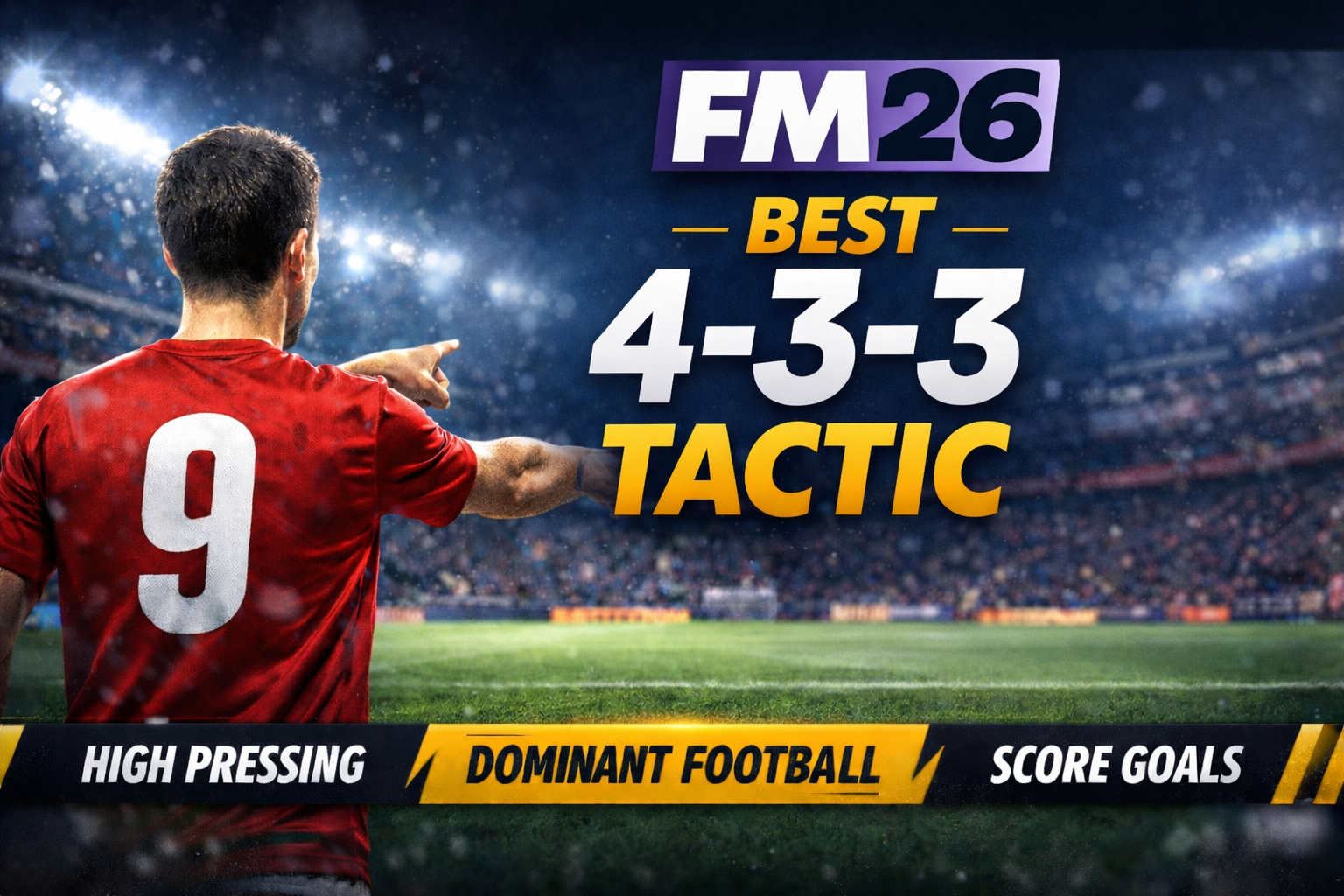
4-3-3 – High Press & Wide Overloads
The 4-3-3 in FM26 is ideal for:
Possession-based systems
High pressing sides
Teams with elite wingers
Midfield control setups
Its key strength is half-space control and wing overloads.
However, it requires intelligent midfield balance.
Too many attacking roles will expose defensive transitions.
3-4-3 / 3-5-2 – Structural Stability
Back-three systems are powerful in FM26 because they:
Provide defensive cover
Allow aggressive wingbacks
Dominate midfield numerically
But they demand:
Intelligent central defenders
High-stamina wingbacks
Good tactical familiarity
Used correctly, these systems can dominate both flanks and transitions.
3. Roles & Duties: Why Two Identical Formations Play Differently
This is where most managers fail.
Two 4-2-3-1 systems can play completely differently depending on roles.
For example:
Shadow Striker (Attack)
vs
Attacking Midfielder (Support)
The Shadow Striker attacks space aggressively and presses high.
The Attacking Midfielder links play and controls tempo.
Another example:
Anchor (Defend)
vs
Half Back (Defend)
The Anchor protects space in front of defense.
The Half Back drops between CBs during build-up.
In FM26 tactics, roles define behavior patterns more than the formation graphic.
When building a system:
Avoid too many Attack duties
Ensure at least 2–3 Support roles
Maintain defensive balance
Protect transitions
Think in movement patterns, not just positions.
4. Pressing Structure in FM26
Pressing wins modern football — and FM26 reflects that.
But pressing is not just “higher line + more urgent”.
You must consider:
Defensive line height
Line of engagement
Trigger press intensity
Trap inside or outside
Stamina levels
High pressing requires:
Fast centre-backs
Work rate
Team cohesion
Low block pressing requires:
Compactness
Defensive positioning
Mental concentration
If your press fails, your shape collapses.
FM26 punishes chaotic pressing more than previous versions.
5. Build-Up Structure & Rest Defense
One advanced concept in FM26 tactics is rest defense.
Rest defense = the structure your team keeps while attacking.
If you push both fullbacks forward and both midfielders attack, your counter-defense collapses.
To maintain balance:
Keep at least 3 players behind the ball
Use a defensive midfielder on Defend
Avoid symmetrical attacking duties
Good tactical managers think about transitions before attacking.
6. In-Game Tactical Adjustments (Mid-Match Management)
Football Manager 2026 rewards active management.
You must watch:
Match momentum
XG trends
Shot locations
Opposition overloads
Fatigue levels
If opponent dominates midfield:
Drop tempo
Add Support duty
Narrow defensive width
If opponent sits deep:
Increase tempo
Add overlaps
Switch passing focus
For detailed breakdowns and real match tweak scenarios, read:
FM 26 Underdog 4-2-3-1 Tactic How to Tweak Mid-Match
Great managers don’t just build tactics.
They adapt them live.
7. Tactical Mistakes That Kill Your Save
Here are common FM26 tactical errors:
❌ Too Many Attack Duties
You lose structure.
❌ High Tempo + Short Passing Conflict
Your players rush possession.
❌ Defensive Line Too High with Slow CBs
You concede through balls constantly.
❌ No Natural Width
You become predictable.
❌ Ignoring Player Traits
Traits override instructions in many cases.
Understanding these mistakes separates average managers from elite ones.
8. Tactical Ecosystem: Squad Building Must Match System
Your FM26 tactics do not exist in isolation.
They must connect with:
Recruitment strategy
Youth development
Training focus
Scouting priorities
If you want aggressive pressing:
Recruit:
High stamina
Work rate
Teamwork
If you want low block:
Recruit:
Positioning
Concentration
Decisions
Tactics and squad DNA must align.
9. Adapting FM26 Tactics for Underdog Saves
When managing weaker teams:
Lower tempo
Reduce pressing intensity
Focus on defensive compactness
Play into space
Avoid high-risk build-up
Underdog FM26 tactics require discipline.
For a complete low-block breakdown, revisit:
FM26 Underdog Tactic That Shocks Big Teams – 4-2-3-1 Low Block Masterclass
10. The Future of Tactical Meta in FM26
Every Football Manager version has a meta.
In FM26:
Structured pressing works
Balanced systems outperform chaotic attacking setups
Compact shapes dominate
Transition defense is critical
But meta tactics only work when adapted to your squad.
Blind copying never wins long-term saves.
Conclusion: Mastering FM26 Tactics is About Structure, Not Just Formation
The biggest misconception in Football Manager 2026 is that formation equals success.
It doesn’t.
Winning FM26 tactics are built on:
Identity
Balance
Roles
Transitions
Adaptation
Squad alignment
If you understand these principles, any formation can work.
And once you master these fundamentals, you stop copying tactics — and start building your own systems.
That is when you truly dominate Football Manager 2026.
FAQ
What is the best tactic in FM26?
There is no single best tactic in FM26. The most effective systems are balanced 4-2-3-1 or 4-3-3 structures that maintain defensive stability while allowing attacking flexibility.
Is gegenpress still overpowered in FM26?
Gegenpress is strong but more balanced in FM26. Poor defensive structure will be punished more than in previous versions.
How important are roles compared to formation?
Roles are more important than formation in FM26 tactics. Two identical formations can perform completely differently depending on role distribution.