

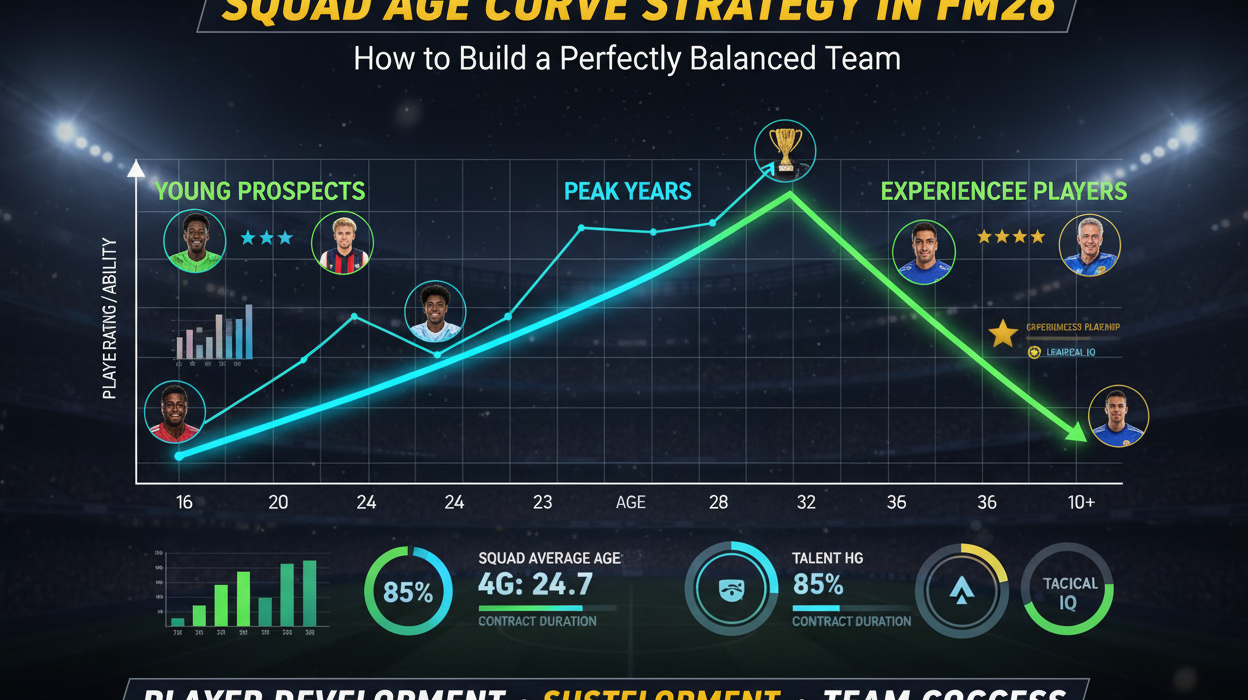
FM26 Squad Age Curve strategy is one of the most underrated foundations of long-term success in Football Manager 2026. While tactics win matches, squad age balance wins seasons. If your team is too young, you lack composure. If it’s too old, you collapse physically. The perfect FM26 squad age curve is about timing player peaks, managing transitions, and avoiding structural decline.
In Football Manager 2026, most managers focus on tactics. Elite managers focus on time.
Age curves determine:
Performance stability
Development speed
Injury risk
Resale value
Wage sustainability
If your squad age structure is wrong, even perfect tactics will collapse within 2–3 seasons.
This guide explains how to build the perfect age-balanced squad in FM26.
1️⃣ What Is the FM26 Squad Age Curve?
In FM26, development and decline follow predictable patterns:
Ages 16–18
Rapid attribute growth
Inconsistent performances
Physical volatility
Ages 19–23
Strong development phase
Physical acceleration peaks
Tactical understanding improves
Ages 24–27
Peak physical + mental blend
Highest performance stability
Ages 28–30
Performance peak
Technical consistency
Physical plateau
31+
Physical decline
Mental attributes may compensate
Injury risk increases
The key insight:
Peak performance ≠ Peak resale value.
2️⃣ The Ideal Squad Age Distribution (Elite Model)
For a competitive club:
20–25% Peak Leaders (26–29)
Core starters.
30–35% Developing Starters (21–24)
High growth + resale.
15–20% Prospects (18–20)
Future assets.
10–15% Veterans (30+)
Leadership + stability.
Too young → chaotic performances.
Too old → financial stagnation.
Balance is sustainability.
3️⃣ Position-Based Age Strategy
Different positions age differently.
Goalkeepers
Peak later (28–33).
Signing 30-year-old GK is not risky.
Centre-Backs
Mental attributes matter.
Peak 26–31.
Full-Backs / Wing-Backs
Physical decline earlier (28+).
Replace proactively.
Central Midfielders
Box-to-box decline earlier.
Deep-lying playmakers last longer.
Wingers
Speed-based roles decline fastest.
Strikers
Poachers decline physically earlier.
Target forwards last longer.
Recruitment must consider positional aging.
4️⃣ Financial Logic Behind Age Curves
A 27-year-old:
✔ Peak performance
❌ Declining resale potential
A 22-year-old:
✔ Rising value
✔ Development upside
❌ Slight inconsistency
Elite saves rotate assets.
Sell at 26–28.
Buy at 20–23.
Never hold too long.
5️⃣ The 5-Year Age Cycle Model
Year 1:
Stabilise with 2–3 peak players.
Year 2:
Introduce 2 young starters.
Year 3:
Sell one peak-value asset.
Year 4:
Promote internal prospect.
Year 5:
Squad average age stable, value rising.
Repeat cycle.
Age management prevents rebuild crashes.
6️⃣ Hidden Danger: The “All Wonderkid” Trap
Many managers sign only 18–20 year olds.
Problems:
Low consistency
Poor big-match temperament
Dressing room instability
Slow tactical cohesion
You need experienced spine:
GK
CB
DM
ST
Without leadership, development slows.
7️⃣ Contract Length Strategy by Age
18–22:
5-year contracts.
23–26:
4–5 years.
27–29:
3 years max.
30+:
1–2 years.
Never trap yourself with long aging contracts.
Wage structure must mirror age curve.
8️⃣ Injury & Physical Decline Modeling
After 29:
Natural Fitness matters more
Injury Proneness becomes critical
Recovery slows
Monitor physical drops yearly.
Replace before performance collapses.
Elite managers sell one season early.
9️⃣ Squad Dynamics & Mentoring
Older players:
Improve professionalism
Influence personality growth
Stabilise morale
But too many veterans:
Block youth pathways
Increase wage load
Mentoring structure should support age model.
🔟 Tactical Identity and Age
High pressing system?
You need:
Younger squad average
High stamina base
Low block?
You can sustain:
Slightly older average
Strong mental attributes
Your tactic determines optimal age balance.
11️⃣ Signs Your Age Curve Is Broken
⚠ Average age above 28
⚠ No sellable assets
⚠ Multiple 30+ starters
⚠ No U23 starters
⚠ Wage budget locked
If this happens:
Rebuild becomes forced — not strategic.
12️⃣ Elite Manager Rule
Never rebuild fully.
Replace gradually.
1–2 pieces per season.
Sustainable squads never crash.
They evolve.
13️⃣ Final Takeaway
Squad building in FM26 is not about assembling talent.
It’s about managing time.
If your age curve is correct:
✔ Performance stays stable
✔ Finances grow
✔ Development compounds
✔ Rebuilds become upgrades
Control time.
Control your save.