

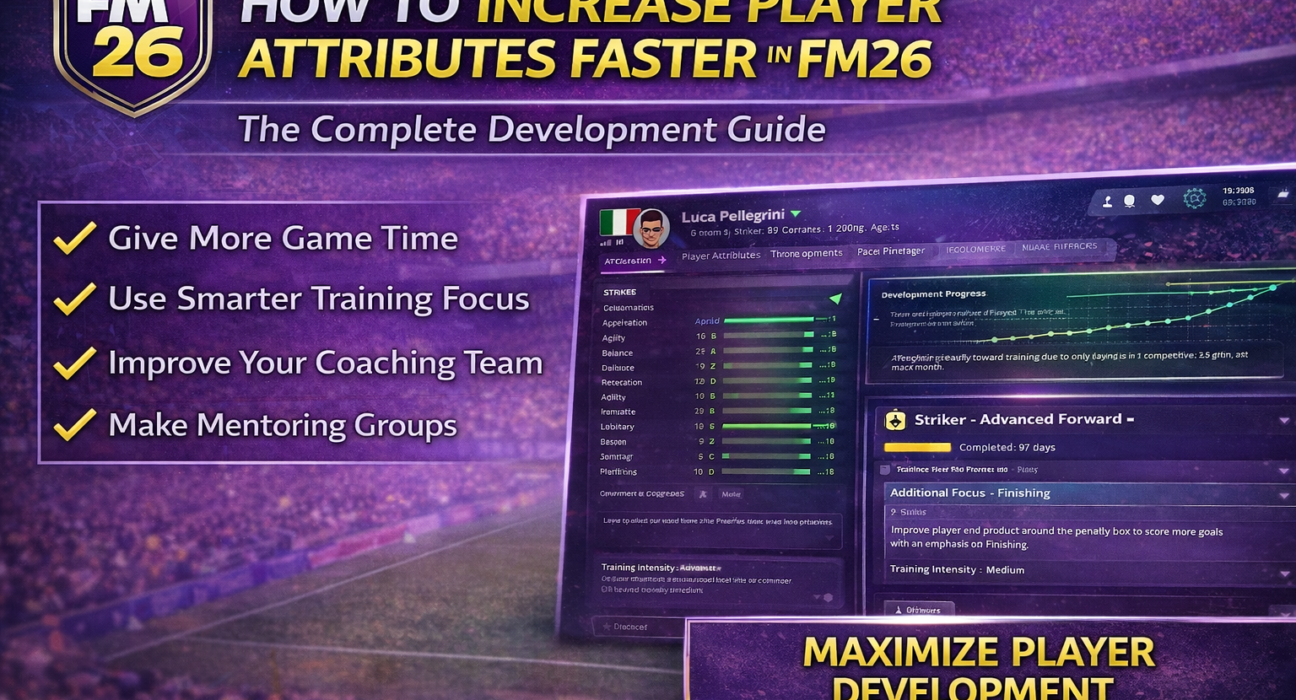
Developing players is one of the most rewarding parts of Football Manager.
Few things feel better than signing a talented youngster and watching him slowly grow into a first-team star. But many FM26 managers eventually face the same frustrating issue:
Some players simply stop improving.
Their attributes barely move, wonderkids stall in development, and promising prospects never reach their potential.
In most cases, the problem isn’t the player. It’s the development environment around them.
In FM26, attribute growth depends on several key factors working together — match experience, training quality, coaching staff, facilities, and player personality.
If you optimize these areas, you’ll start seeing much faster development across your squad.
Let’s break down how it works.
1. Playing Time Matters More Than Training
One of the biggest misconceptions in Football Manager is that training alone develops players.
Training helps — but match experience is what truly accelerates development.
Young players improve much faster when they regularly play competitive matches. Sitting on the bench for an entire season will slow their progress dramatically.
Ideally, developing players should get:
Regular starts or rotation appearances
Competitive match minutes
A clear role within the squad
A useful guideline is that young prospects should play around 20–25 matches per season.
If you can’t offer that level of playing time, a loan move is often the best solution.
2. Use Individual Training Properly
Individual training is where many managers unintentionally slow down development.
Leaving players on general training may work, but targeted training is far more effective.
Assign players to train in roles that reflect how you want them to develop.
For example:
A young striker → Advanced Forward or Complete Forward
A winger → Inside Forward or Winger
A centre-back → Ball Playing Defender or Central Defender
This ensures the most relevant attributes receive extra attention.
You should also use additional focus training.
Some examples:
Strikers → Finishing
Wingers → Crossing or Dribbling
Midfielders → Passing or Vision
Defenders → Positioning or Heading
Small adjustments like these can speed up attribute growth significantly.
For more details about training take a look at our Training Guide
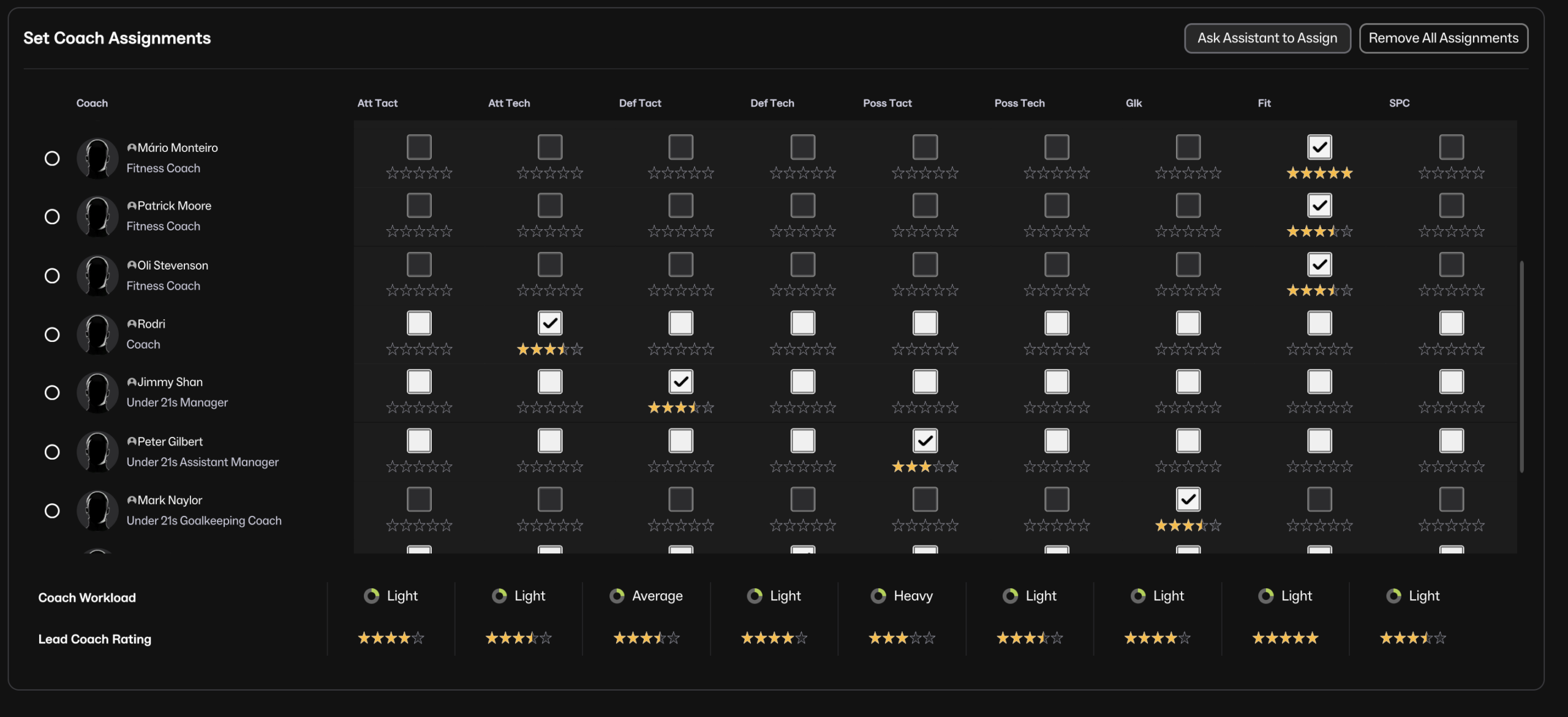
3. Your Coaching Staff Makes a Huge Difference
The quality of your coaching staff directly affects how efficient training sessions are.
Even talented players will develop slower if the training environment is poor.
When evaluating coaches, look closely at attributes such as:
Determination
Level of Discipline
Motivating
Specific coaching attributes
Higher coaching quality leads to better training sessions — which ultimately means faster player improvement.
If long-term development is important for your save, investing in strong coaching staff is one of the smartest decisions you can make.
4. Player Personality Is a Hidden Development Factor
Personality is often overlooked, but it plays a major role in development.
Players with strong professional personalities tend to improve faster and reach their potential more reliably.
Some of the best personalities include:
Model Professional
Model Citizen
Professional
Perfectionist
Players with weaker personalities may struggle to maximize their potential.
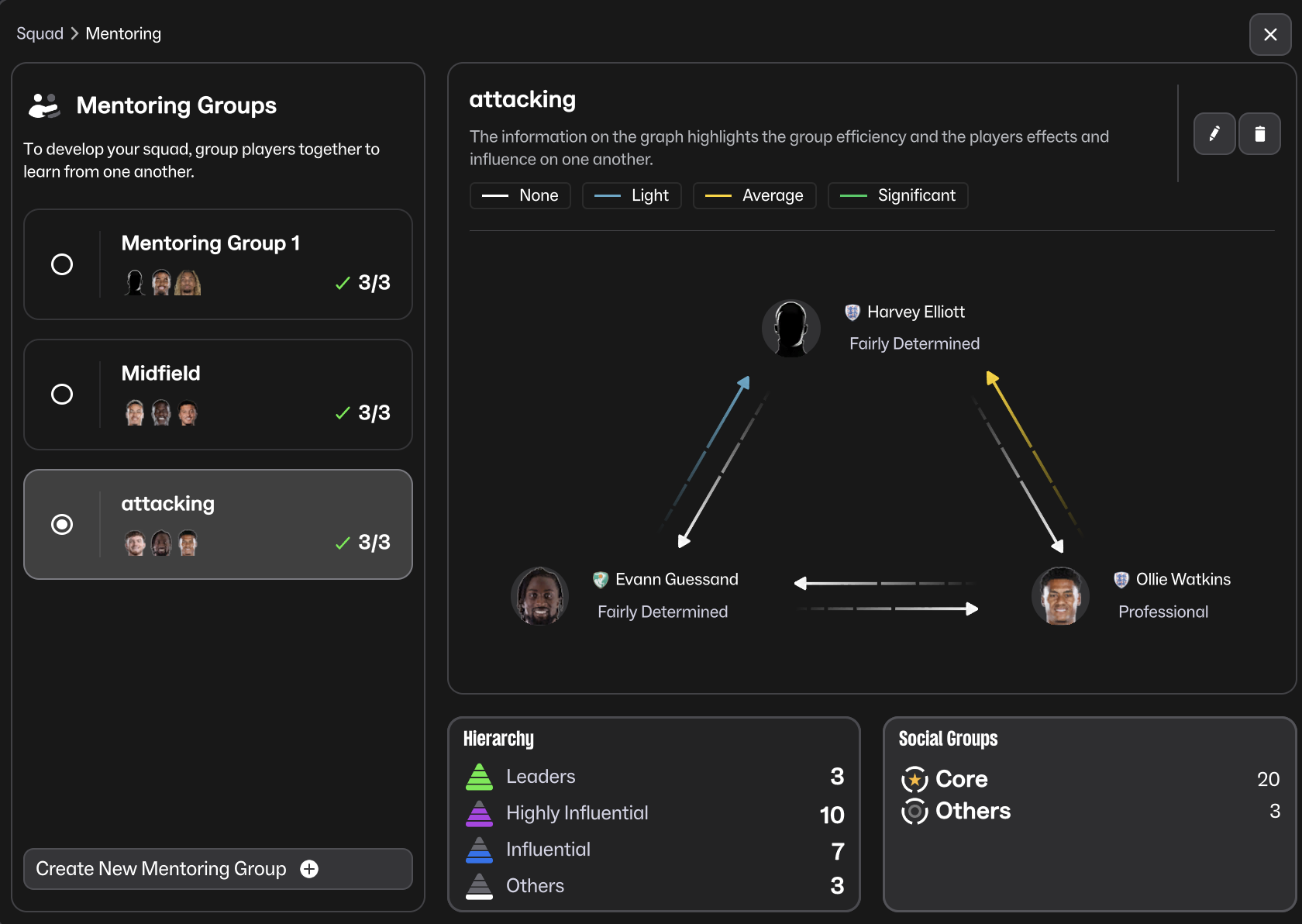
One way to influence personality is through mentoring groups.
By pairing young players with experienced professionals who have strong personalities, you can gradually improve their mentality and professionalism.
Over time, this can have a noticeable impact on development.
For more details about mentoring take a look at our Mentoring Guide
5. Don’t Overload Young Players With Training
While training intensity helps development, too much workload can have the opposite effect.
Excessive training often leads to:
Fatigue
Injuries
Reduced performance levels
For most young players, a balanced training workload works best.
This usually means:
Medium or Heavy training intensity
Good match sharpness
Low injury risk
Keeping players healthy and available is essential for consistent improvement.
6. Use Loans the Right Way
Loan spells can dramatically accelerate player development — but only if the conditions are right.
A good loan move should offer:
Regular playing time
A competitive league
Solid training facilities
A tactical system that suits the player
A youngster playing every week in a strong league will almost always develop faster than one sitting on your bench.
7. Training Facilities Still Matter
Club infrastructure also affects development speed.
Better facilities create a better training environment, which helps players improve more efficiently.
If your club has average or poor facilities, consider requesting upgrades from the board.
Improving training facilities is a long-term investment that benefits every player in your squad.
8. Development Takes Time
Even when everything is optimized, development won’t happen overnight.
Player attributes often improve in phases rather than steady progression.
You may notice:
Sudden jumps after strong match performances
Slower periods during injuries or poor form
Patience and consistency are key when developing young players.
The Real Formula for Faster Attribute Growth
Improving attributes quickly in FM26 isn’t about a single trick.
It’s about building the right environment.
The most important factors are:
Playing Time + Training Quality + Personality + Facilities
When these elements work together, players develop much faster — and your squad will steadily improve over time.