

Football Manager 27 is finally available to try, and after the difficult experience of FM26, there is plenty of curiosity surrounding the new edition. Has Sports Interactive managed to address the problems that frustrated players? Does the new interface make everyday management more enjoyable? And, most importantly, does FM27 feel like the Football Manager we have been waiting for?
The free Launch Preview, available until 3 November, gives players their first opportunity to explore the game before committing to the full experience. After looking at the new interface, starting a career and getting through the first match, there are already some encouraging signs.
Our first impressions are based on the early gameplay experience, including the detailed FM27 gameplay video we have been following. Rather than simply repeating the features announced by Sports Interactive, we want to focus on what these changes actually mean when managing a football club.
The early verdict? FM27 feels smoother, more accessible and, in several important areas, much closer to the Football Manager experience players expect.
1. A Smoother Start and a More Comfortable Interface
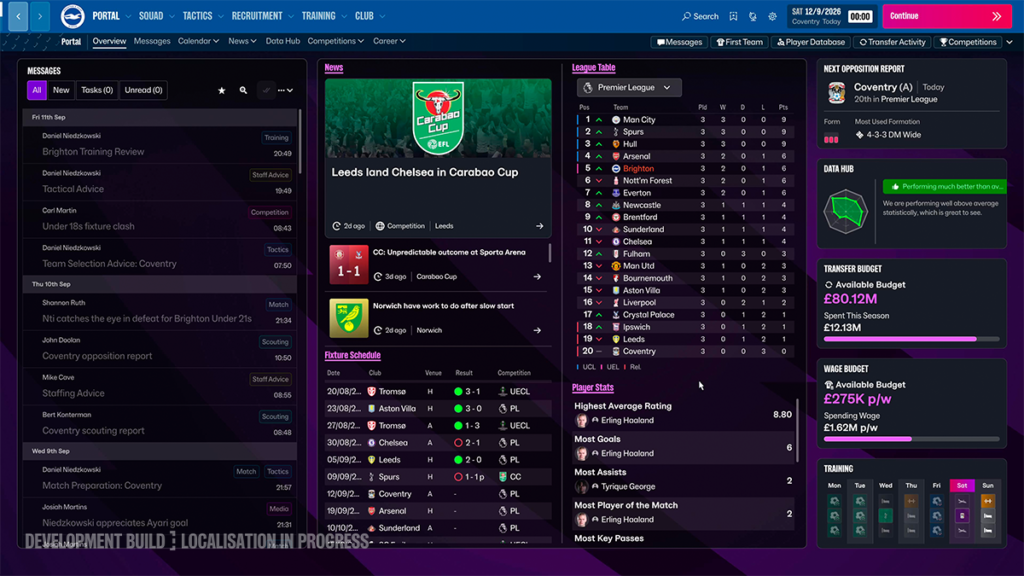
The first thing you notice when starting a new career is how the game handles its menus and navigation.
From selecting leagues and clubs to creating your manager profile, the opening process feels straightforward. The manager creation screen also offers additional customisation options, including changes to clothing and appearance.
However, the more interesting improvements become apparent once you enter the game.
The main interface feels more responsive, with quicker transitions between screens. Navigating between different sections no longer feels like an unnecessary interruption to the management experience.
One particularly useful addition is the ability to customise the shortcuts displayed on the right-hand side of the main screen.
Want quick access to fixtures, player databases, messages or set pieces? You can arrange these shortcuts according to your preferences.
This may sound like a relatively small change, but it makes a difference during a long career. Instead of repeatedly navigating through menus, you can put the information you use most frequently within easy reach.
The Tournament Centre is another welcome feature, allowing you to view the standings of different competitions from one place.
Responsibilities have also become easier to manage, with relevant options accessible directly from the screens where you need them. Messages can be viewed without opening an entirely separate window, helping maintain the flow of the game.
There is also a more organised approach to colour coding. Different types of messages, including transfers, training, injuries and club information, are easier to distinguish at a glance.
The biggest improvement here is not a single feature. It is the feeling that the interface is finally working with the player rather than against them.
2. Tactical Effectiveness Could Change How We Build Teams
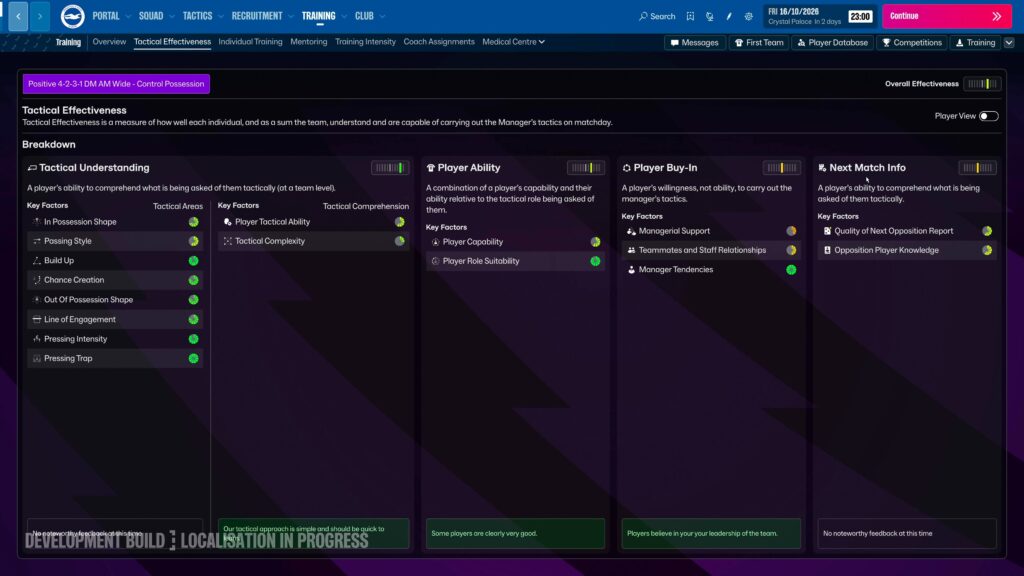
If there is one area that deserves particular attention in FM27, it is tactical management.
Tactical Effectiveness is one of the most interesting additions because it connects several aspects of squad management that previously felt more separate.
The system brings together four important elements:
- Tactical Understanding: How well the team understands and adapts to your tactical approach.
- Player Ability: Whether individual players have the attributes required to perform their assigned roles.
- Player Buy-In: How willing players are to embrace your tactical instructions and football philosophy.
- Next Match Knowledge: The information players have about the upcoming opponent and match.
Together, these elements contribute to the team’s overall Tactical Effectiveness.
This creates an interesting challenge, particularly when taking charge of a new club.
Imagine inheriting a team that has spent several seasons playing a direct, high-intensity pressing system. Immediately switching to a possession-based philosophy could be difficult, even if you believe it is the right long-term direction.
Your players may not have the necessary attributes, may struggle to understand the new instructions or may simply not be convinced by your approach.
That means changing a team’s identity could require patience, targeted recruitment and time on the training ground.
The Player Buy-In element is especially interesting. Managers will want to know whether their players genuinely support the football philosophy being introduced.
It also gives recruitment another dimension. Signing a technically gifted player is not necessarily enough if that player cannot perform the role you expect or does not fit the team’s overall approach.
Another useful aspect is the advice provided by the coaching staff. The game can highlight areas that need additional attention in training, such as pressing intensity or specific tactical instructions.
Rather than relying entirely on intuition, managers have more information to help identify weaknesses.
Tactical Effectiveness has the potential to make building a football identity a much more meaningful part of every save.
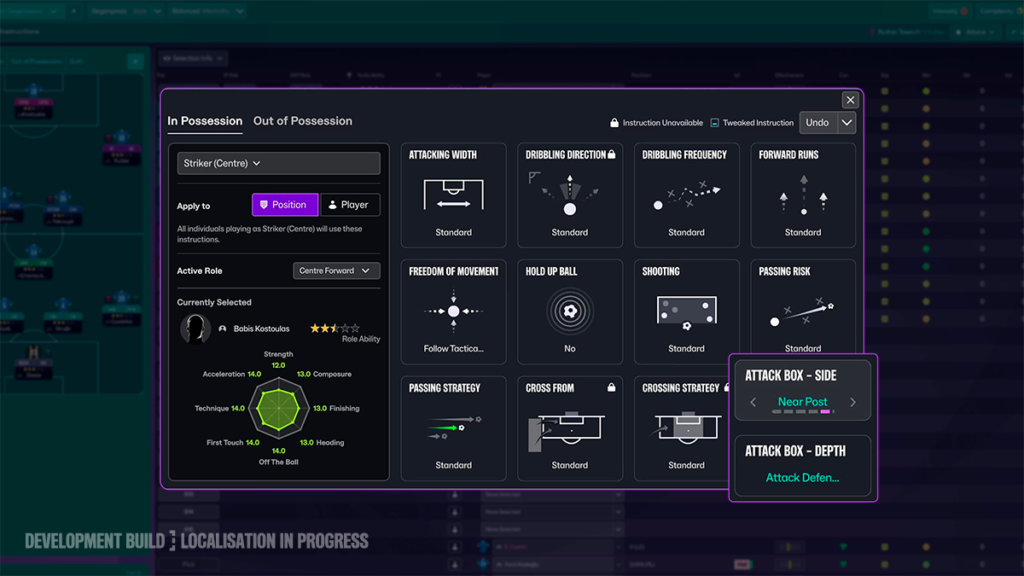
3. Matchday Tactical Changes Feel More Accessible
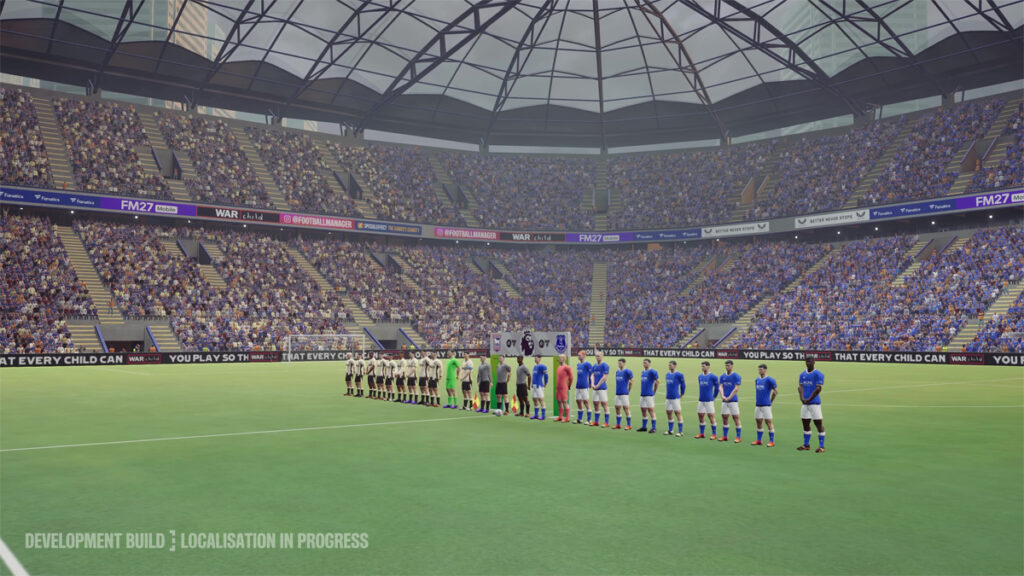
FM27 also introduces a more accessible approach to making tactical adjustments during matches.
The ability to apply groups of related instructions through matchday tactical options makes it easier to react to changing situations.
For example, selecting a more defensive approach can automatically adjust several team instructions to create a compact, cautious setup.
On the other hand, an all-out attacking approach can increase the tempo, encourage more aggressive attacking movements and push additional players forward.
This reduces the need to manually change multiple instructions whenever you want to alter your team’s approach.
Individual player instructions also provide another way to communicate with your squad from the touchline.
However, there is an important lesson from the first gameplay experience: these options are powerful, but timing matters.
In the gameplay video, switching to a much more attacking approach while chasing the game left the team exposed. The opposition took advantage and scored twice.
It is a useful reminder that attacking more aggressively does not automatically mean creating better opportunities.
Knowing when to take risks, when to protect a result and when to change your approach remains an essential part of football management.
4. A Better Training Experience
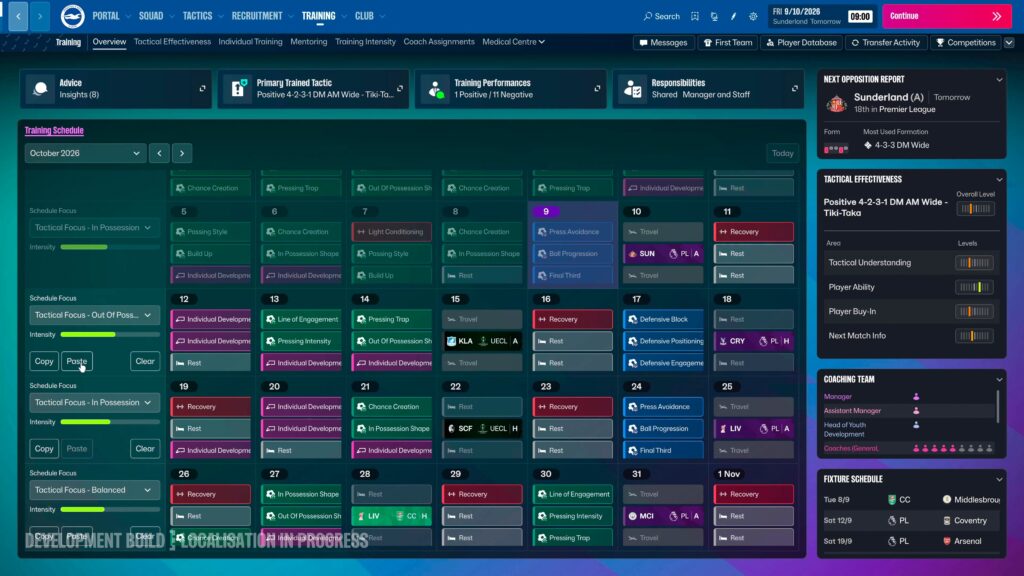
Training is another area that benefits from practical quality-of-life improvements.
One particularly useful addition is the ability to copy and paste training schedules.
Managers can copy a training programme from one period and apply it to another, making it much easier to organise pre-season preparations or repeat successful training routines.
You can also undo changes if you make a mistake.
Training sessions provide more detailed information about what they are designed to improve, helping managers understand the purpose of individual exercises.
The Tactical Effectiveness information is also available within the training section, making it easier to identify players who may need additional work.
There is also a clearer way to monitor injury risks and adjust individual training intensity accordingly.
These changes may not completely transform the training system, but they make an important part of long-term squad development more convenient.
For managers who enjoy taking control of every aspect of their club, these are welcome improvements.
5. Match Engine: Better Football, Better Presentation?
The match engine is always one of the biggest talking points whenever a new Football Manager arrives.
FM27’s early gameplay offers some encouraging visual impressions.
Pass combinations, triangles, individual movements and technical actions appear more noticeable during matches. There is a greater sense of players combining with one another rather than simply moving the ball between isolated positions.
The gameplay also highlights details such as backheel passes and more clearly presented through-ball situations.
These moments help make the football look more natural and enjoyable to watch.
Another welcome improvement is the way match information is presented.
Players can follow match statistics alongside the actual events on the pitch, rather than having to rely exclusively on one or the other. Clicking on individual information allows you to explore additional details.
This is a practical improvement for managers who like analysing matches while watching them unfold.
Of course, visual presentation alone cannot determine whether the match engine is genuinely better.
The real test will be consistency across different formations, playing styles and situations over a full season.
Still, the early signs are promising.
6. Stadium Atmosphere and Matchday Audio Make a Difference
One of the most noticeable aspects of the first match experience is the atmosphere.
Crowd reactions, stadium sounds and goal celebrations contribute to a more engaging matchday presentation.
This is an area where the difference becomes easier to appreciate during actual gameplay than when looking at individual screenshots.
The crowd may not immediately attract your attention while you are concentrating on tactical decisions, but the overall soundscape helps create a stronger sense of occasion.
The first gameplay experience also highlights the improved stadium audio and the impact of crowd reactions during important moments.
For players who enjoy watching matches in 3D, these details can make a meaningful difference.
Football Manager is still fundamentally about managing a football club, but the emotional connection with matchdays is an important part of why so many players spend hundreds of hours with the series.
FM27 seems to be moving in the right direction here.
7. Small Features That Make Everyday Management Easier
Not every improvement needs to be a major headline feature.
Several smaller additions deserve attention because they make everyday management more convenient.
Customisable player attribute colours
Managers can now adjust attribute colour settings in greater detail, allowing them to highlight the attributes that matter most to their preferred playing style.
This is particularly useful when comparing players or searching for specific profiles.
Customisable keyboard shortcuts
Players who prefer keyboard navigation can configure shortcuts for frequently used actions. This provides another way to reduce unnecessary menu navigation.
The return of the draw feature
The draw feature is back, allowing managers to conduct competition draws and assign teams more conveniently.
It is a relatively small addition, but one that will be appreciated by players who missed this functionality.
More convenient squad management
Accessing different squads and making selection changes feels more direct. Moving between the senior and youth squads is particularly useful when preparing for matches with registration or eligibility restrictions.
These are not necessarily the features that will sell FM27, but they contribute to a more comfortable overall experience.
8. What Still Needs to Be Tested?
Despite the positive early impressions, it would be premature to declare FM27 a complete success.
The Launch Preview provides an opportunity to explore the game, but a short gameplay session cannot answer every important question.
Some areas require considerably more time:
- Long-term match engine consistency: Do the improved animations and player movements remain convincing across different tactical systems?
- Transfer AI: How effectively do clubs recruit, negotiate and manage their squads over multiple transfer windows?
- Player development: Do Tactical Effectiveness and training improvements have a meaningful impact over several seasons?
- Squad dynamics: How consistently do players respond to changes in football philosophy and managerial decisions?
- Technical performance: Does the game remain smooth during longer careers and with larger databases?
These questions will become much easier to answer once players have spent more time with the game.
It is also important to remember that a smooth first experience does not necessarily guarantee a consistently enjoyable 100-hour career.
For Football Manager, long-term depth is just as important as first impressions.
Final Verdict: FM27 Gives Us Reasons to Be Optimistic
Football Manager 27 has made a positive first impression.
The most encouraging aspect is the overall direction of the improvements. Instead of focusing exclusively on adding new features, Sports Interactive appears to have paid attention to how players interact with the game every day.
The interface feels smoother, tactical management has gained another layer of depth, training is more convenient and the matchday experience is more immersive.
Tactical Effectiveness could be particularly important if it delivers the depth suggested by its different components. Building a squad around a football philosophy, convincing players to embrace it and gradually developing the team’s identity could make every managerial appointment more interesting.
There are still questions to answer, especially regarding long-term gameplay and the consistency of the match engine. But the early experience is certainly more encouraging than what many players remember from FM26.
Is Football Manager finally back on track?
It is too early to give a definitive answer. However, FM27 feels like a much-needed step in the right direction.
And perhaps that is exactly what the series needed.
The free FM27 Launch Preview is available until 3 November. If you have not tried it yet, there is still time to experience the new edition and decide for yourself.
Have you played FM27 yet? What is your favourite improvement so far? Let us know in the comments.